RoboParty RP1: a humanoid robot with nothing kept secret
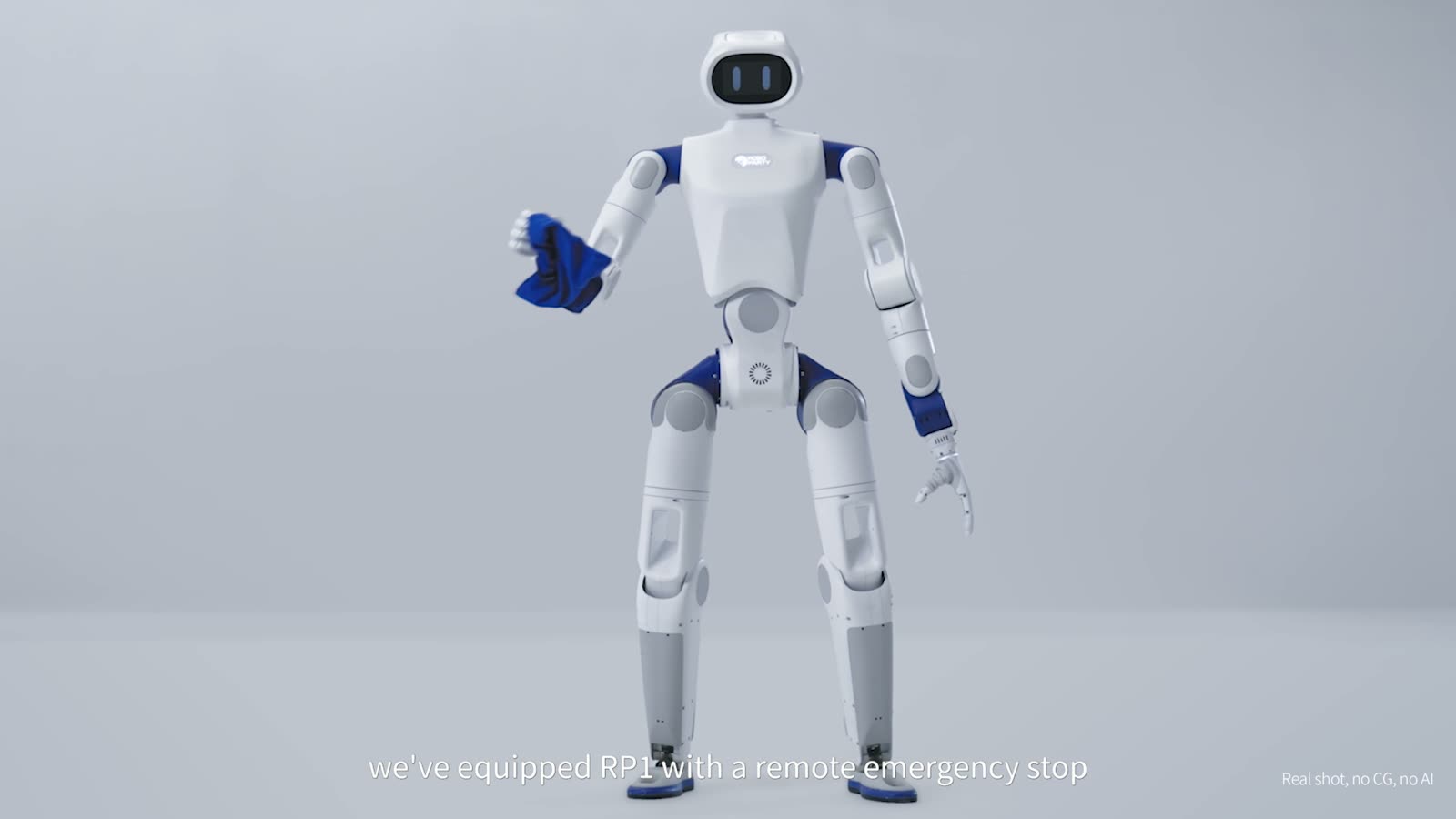
In mid-October, Shanghai robotics company RoboParty launched the RP1, a humanoid robot about 1.35 metres tall. What sets it apart is not what it can do but how much of it you are allowed to see. RoboParty has published the mechanical drawings, parts list, circuit boards, motor firmware, simulation models and training code, so anyone can study how it works, change it or build their own.
There is no Australian price or release date for it yet. RoboParty has not published a price, and nobody is selling it in Australia.
Who it is for
This is not a robot for your house. RoboParty pitches the RP1 at robotics researchers and independent developers, the people writing the software that teaches humanoids to walk, balance and pick things up. Most humanoids on the market let you write programs on top but keep the inside closed. The RP1’s launch film puts it plainly: “No black boxes. What you see is what you get.”
For a university lab or a small team, that matters because the hardest problems in humanoid robots sit low down, in how the motors respond and how the robot recovers when it is pushed. RoboParty designs its own joint motors and gives users direct control of them, which a closed robot does not.
What RoboParty showed
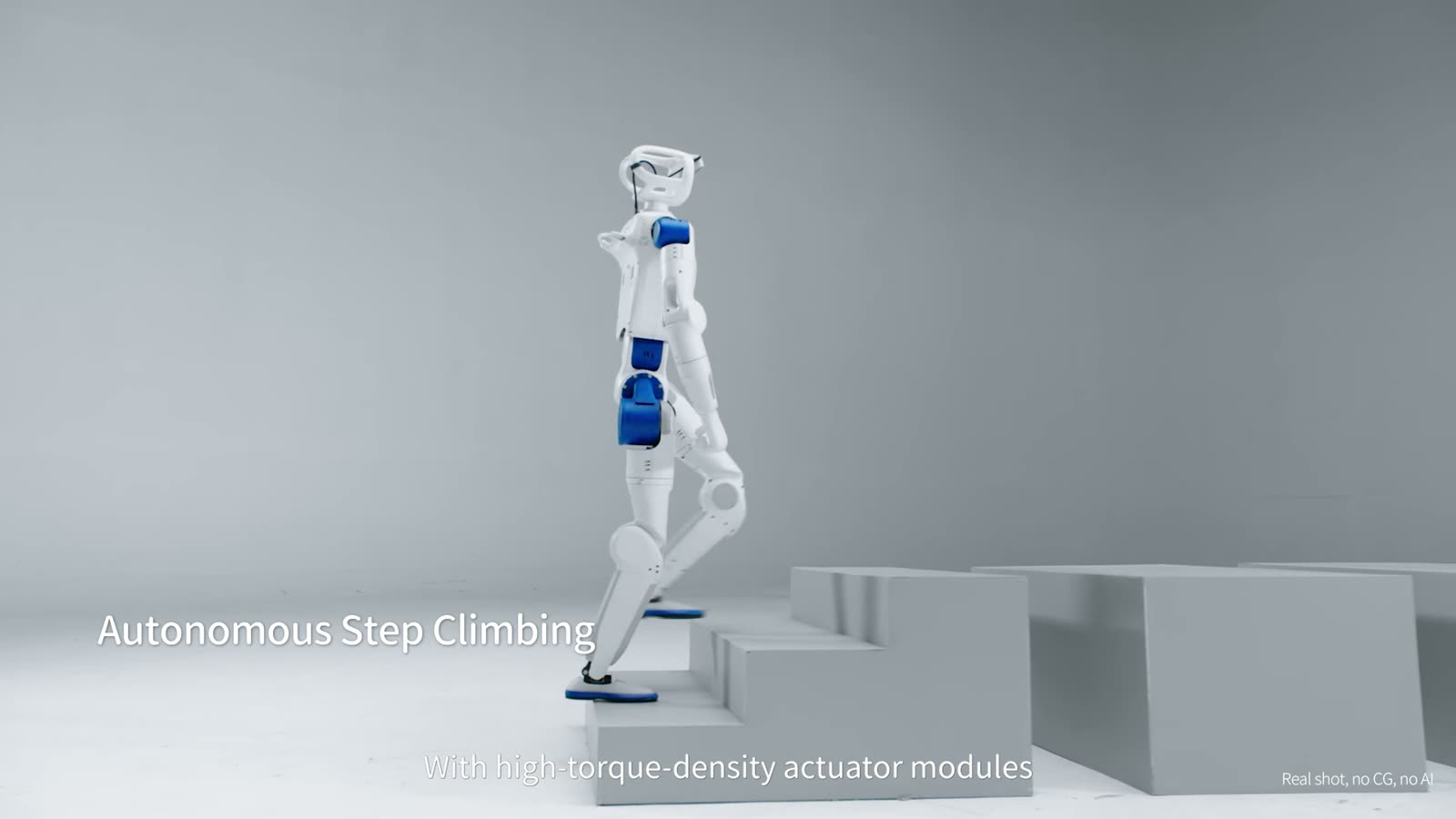
The launch film runs for about two and a half minutes and carries an on-screen note that it is real footage with no computer graphics. It shows the RP1 climbing a set of steps on its own, stepping over an obstacle, and copying a person’s movements in real time. RoboParty says it has also shown the RP1 recovering when pushed and getting back up after a fall. Most of the film is about the build: the joint motors coming apart, a developer working on the robot at a desk, and the parts that swap in and out.
RoboParty’s RP1 launch film on YouTube
Swappable heads and hands
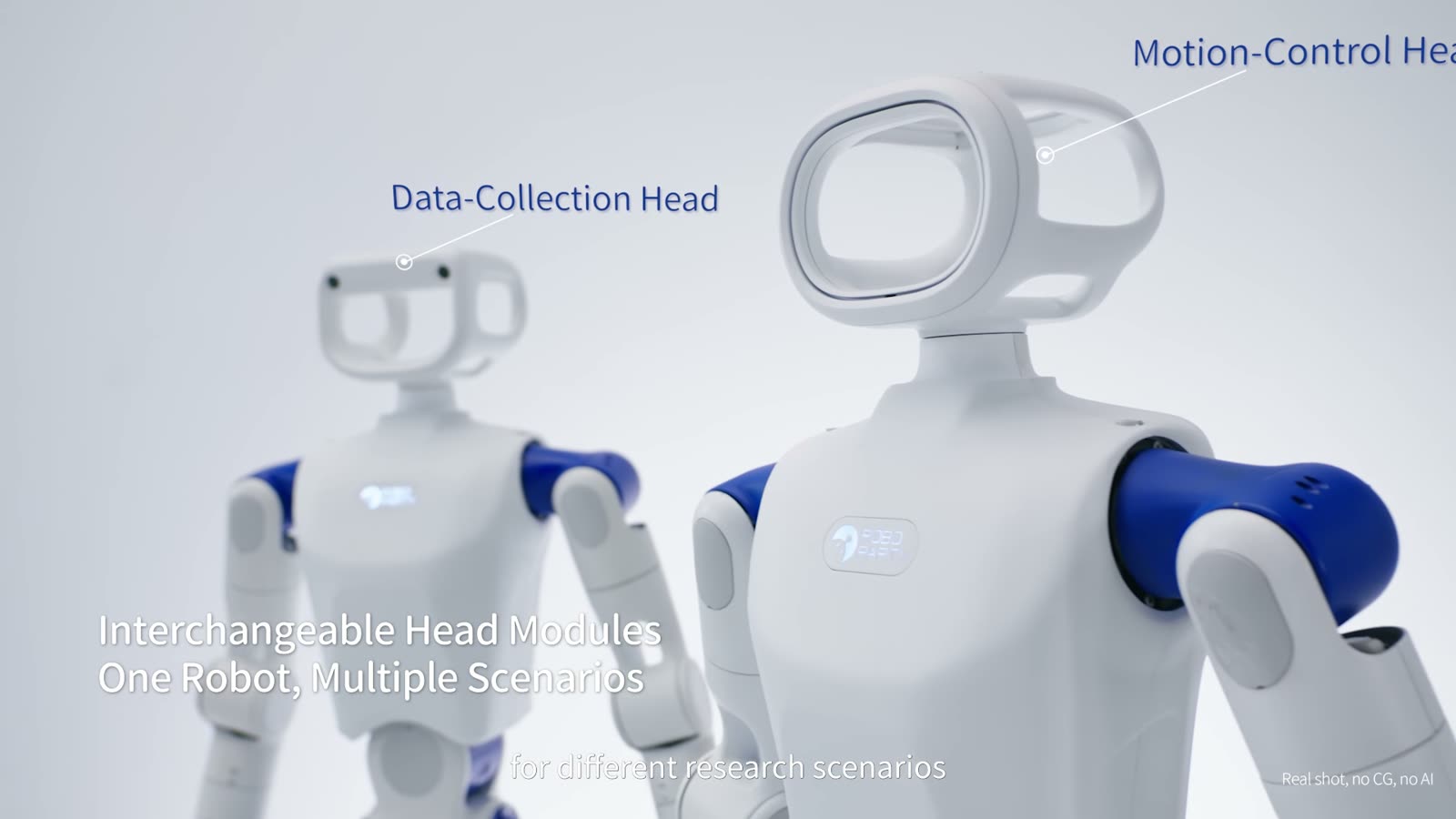
The RP1 is built to be reconfigured. It has four heads for different jobs: one for movement control, one for talking to people, one with cameras for recording training data, and one with a depth camera and laser scanner for sensing the room. The hands come off at the wrist and can be replaced with a dexterous hand or a gripper. There are mounting points and a 24 volt power connection for adding equipment of your own.
The specifications
RoboParty lists two versions. The standard RP1 weighs about 39 kilograms, has 24 motorised joints and comes with simple fixed hands and no camera. The Pro weighs about 41 kilograms, has 30 joints, longer arms, a six-jointed dexterous hand, a camera, a microphone, a screen and voice control.
Both are rated to run at up to 4 metres per second, climb a 30 degree slope and carry 3 kilograms. The battery is listed at about three hours, takes an hour and a half to charge, can be swapped without switching the robot off, and the robot can keep working while it charges. RoboParty’s own figures for charging do not agree: the film says 240 watt fast charging and the published specifications say 140 watt.
The listed operating range is minus 10 to 40 degrees. For anyone thinking of working with one outdoors in an Australian summer, that top figure is worth noting.
Safety
RoboParty says it built the RP1 with a remote emergency stop, a second stop that a person can carry, and joints enclosed so fingers cannot be caught in them. Its specifications note that speed, running time and the sensors fitted all depend on the version, the load, the ground and the software.
What is not known yet
RoboParty has not said what the RP1 costs, which countries it will ship to, or how warranty and repairs would work outside China. It also says the operating system underneath, which it calls PartyOS, will be opened up in stages, so not all of the software is public yet. Because the designs are published, a team in Australia could in principle build parts of it themselves, but RoboParty has not said what a complete build would cost.